Mimetic Example Guides #02 Behavior & Personality
Human-crafted distinctions, enhanced through AI-assisted analysis.
Then mimetic words may be one of the biggest hidden traps in your Japanese.
Take kyoro-kyoro, for example.
彼は嘘がばれて問い詰められ、キョロキョロしていた。
Confronted about his lie, he glanced around nervously.
At first glance, the sentence seems acceptable. A guilty person avoiding eye contact feels natural enough that even native speakers—and modern AI systems—may overlook the mismatch. But kyoro-kyoro suggests attention shifting across the surrounding space, as if the person were scanning for something. Here, his attention is fixed on the person confronting him; only his gaze is trying to escape. kyodo-kyodo better captures that flustered, suspicious movement.
Mimetic words are not defined only by meaning. They carry physical scale, texture, rhythm, emotional tone, and sensory imagery — boundaries that native speakers follow intuitively but rarely explain directly.
This guide explores those invisible boundaries in detail.
This is not a dictionary.
This is a linguistic dissection.
To map these boundaries, AI is used to generate large pools of candidate sentences, but the final distinctions and judgments remain entirely human-driven. onowords DeepDive: Mimetic Example Guides examines 15 essential mimetic words in each volume through a structured three-stage approach:
The Three-Stage Approach
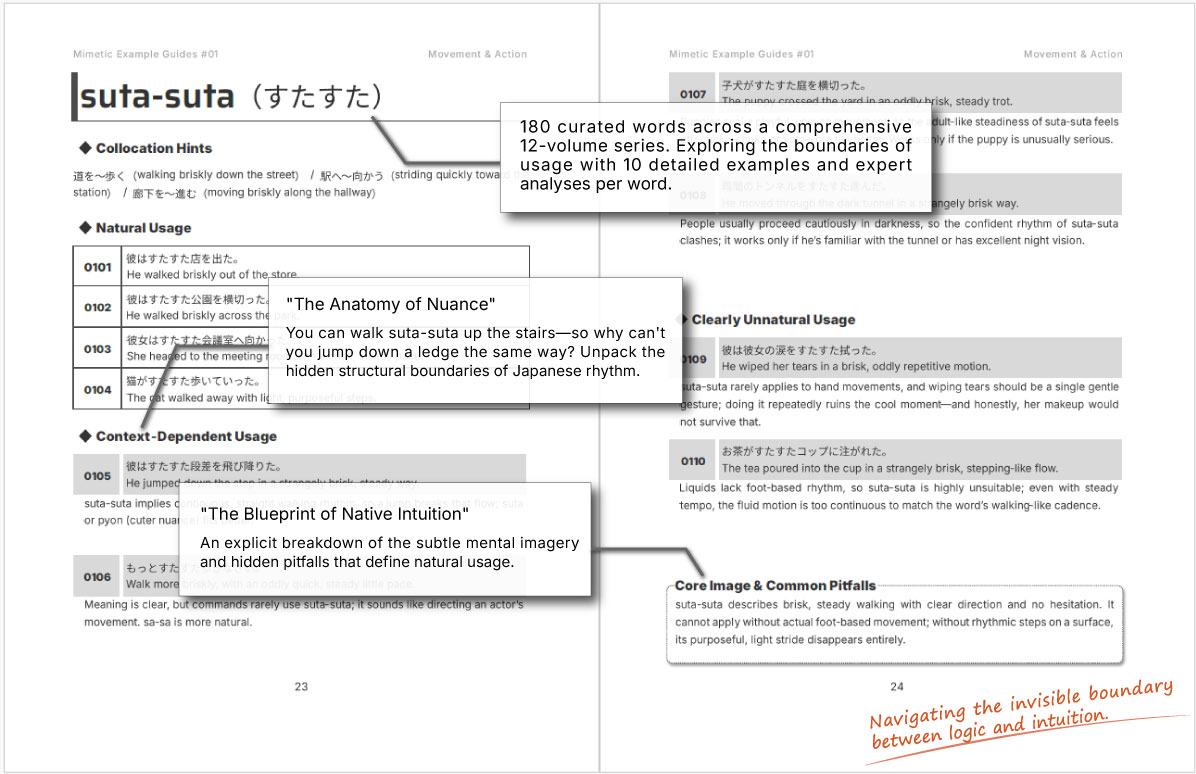
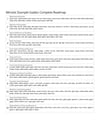
- Natural Usage — Clear, natural examples that establish the standard usage and intuitive feel of the word.
- Context-Dependent Usage — Expressions that may sound unusual at first, but become vivid, poetic, or highly effective in the right context. Many of these usages can even appear “correct” to advanced AI systems despite sounding subtly unnatural in ordinary speech.
- Clearly Unnatural Usage — Sentences where the imagery breaks down completely, revealing the semantic and sensory limits of the word.
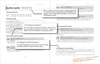
Inside Each Entry
- Collocation Hints — Common pairings and usage patterns for practical application.
- 10 Nuanced Examples — Carefully designed examples ranging from fully natural usage to intentionally distorted or impossible combinations.
- Core Image & Common Pitfalls — Understand the sensory image, intuitive boundaries, and frequent learner mistakes associated with each word.
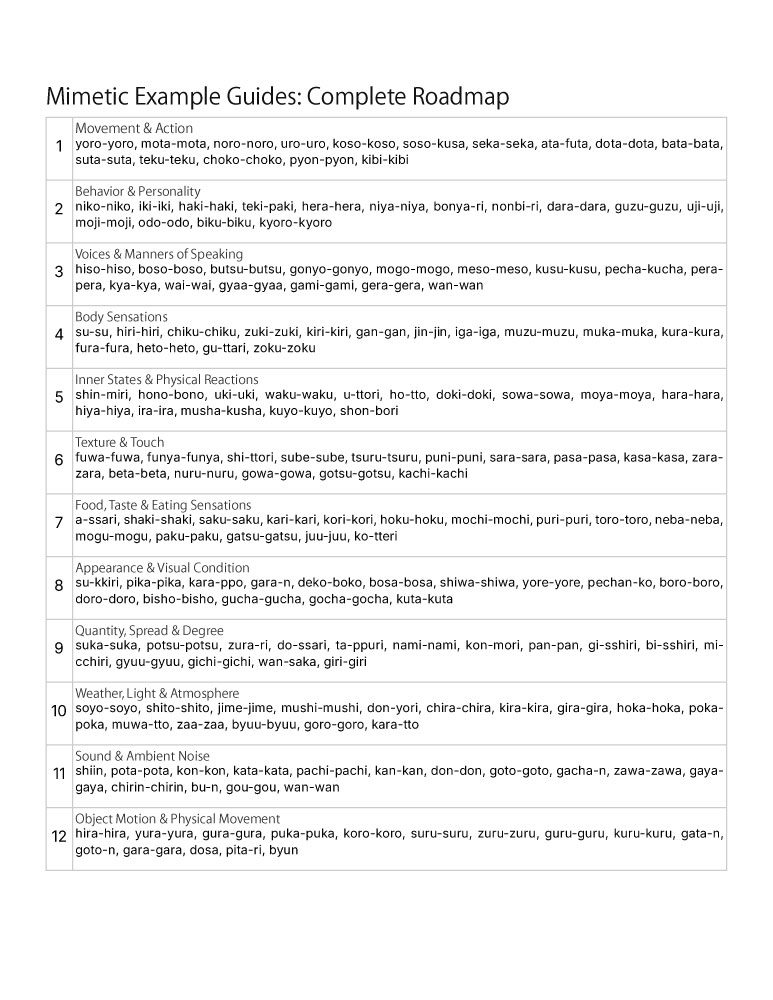
This series is part of a 12-volume collection covering 180 carefully selected Japanese mimetic words. Designed for intermediate and advanced learners, translators, writers, and creators seeking deeper control over nuance, tone, and native-level expression.
Don’t just memorize mimetic words. Learn where they truly work — and where they quietly fall apart.
Words featured in this volume
niko-niko, iki-iki, haki-haki, teki-paki, hera-hera, niya-niya, bon-yari, non-biri, dara-dara, guzu-guzu, uji-uji, moji-moji, odo-odo, biku-biku, kyoro-kyoro
This volume is part of the onowords Boundary Analysis Project, an ongoing effort to document the sensory boundaries, physical presence, and narrative behavior of Japanese mimetic expressions.